
Two local youth groups merge to prioritize creativity, art, and destructured learning
Two Local Youth Groups Merge for Creativity and Learning
WOONSOCKET – Riverzedge Arts began in 2002 as an organization prioritizing creative education as a cornerstone for empowerment, promoting civic engagement in an effort against youth violence in underserved communities.
Their goal is to create projects that engage adolescent and teenage students through various classes that teach important life skills, like leadership and problem solving, through the involvement of mentors.
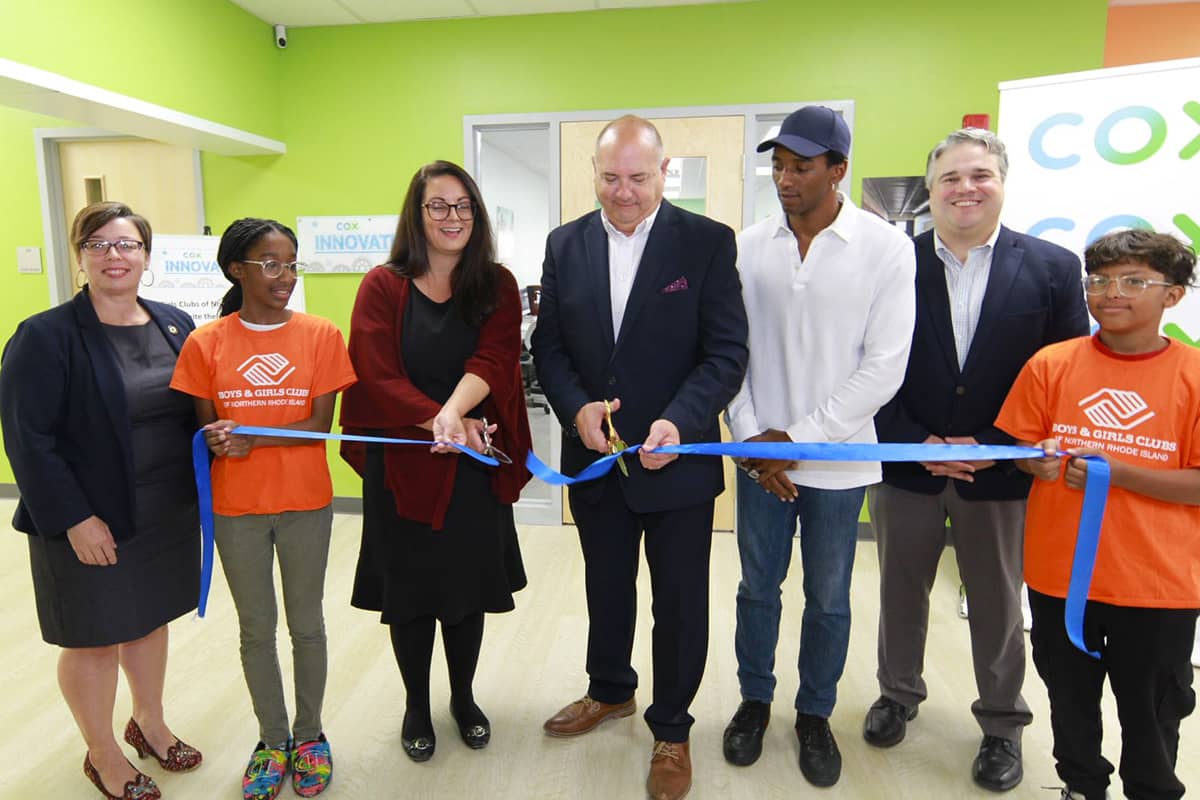
Riverzedge has recently partnered with The Boys & Girls Club of Northern Rhode Island (BGCNRI) to promote accessibility to arts education for children and young adults through STEAM and STEM programs.
Natalie Martin, education director at the BGCNRI, said she believes that “early education is so important; it is the prime years of life. The things that they’re learning in early childhood education are superior to things they’ll learn later.”
Martin said she enjoys seeing “children absorb things through different ways, not just reading a book and answering questions. The most important learning happens when you’re younger, it’s where you learn to read and write; all your skills are from those first teachers you have.”
The combination of Riverzedge and BGCNRI, as stated in a release, “aligns Riverzedge’s award-winning creative workforce development model with BGCNRI’s broad spectrum of programs in academic support, health and wellness, character development, and leadership. Together, they aim to offer a more comprehensive, impactful experience for young people at every stage of growth.”
Martin helped with the merger between the two, and focuses on “creating an after-school program that is a safe space for them. We want it to be consistent in their lives, but also want to implement teaching in a fun way so that they don’t realize they’re learning. School can be cut and dry and learning without experiences; we want to help grow their intellect so that they’re not just learning in school but learning throughout their day, every day.”
That is one of the ethos that Kristin Hark, arts director at Riverzedge, uses to create her curriculum for the new STEM and STEAM classes.
Hark, originally a K-12 art teacher in Massachusetts, says, “I wanted to do something out of school where I could focus more on enrichment and building community.”
Hark is a big fan, she says, of creating projects that are cross-curricular, “I really love being unconventional and having students work on two different subjects at the same time.”
An example of a class she’s teaching is introducing the concept of the structural integrity of a hexagon to her students, then relating that to the natural occurrence of a bee’s honeycomb, which would then result in an outdoor project. Hark takes complex topics and grounds them in real-life examples to help bridge the gap between theory and application in the learning process.
“First, we go over angles and engineering,” says Hark, “then we might prepare for it by building a bridge out of popsicle sticks. First we have to ask, ‘What shapes are the strongest?’ and then we would talk about shapes in nature, for example the honeycomb, the hexagon, and then we would talk about why they’re shaped that way and that could lead us to a talk about bees and a trip out to our community garden.”
A New Chapter for Youth Arts in Northern Rhode Island
Riverzedge shut down a few years ago due to lack of funding, which is another reason why this merger is important to revitalizing equitable early art education. Riverzedge once had four studios, and 40 artists, but is now down to one studio that can serve 10 kids.
“Building community in Woonsocket is really important,” states Hark. “This crossover can give us a greater impact. We want to build up to where we were and continue to expand.”
By teaching art, STEM and STEAM programs to kids, Hark is helping them prepare for real-life opportunities. “I think arts education can translate into a job. It is important for kids to know they have that option and not be discouraged; a big barrier in schools is that a lot of visual arts curriculum is production based.
“Art should be more accessible, especially to children, it gives them more inhibition to flex creative muscles that can translate into problem solving and real-world skills. Most importantly they are allowed to play, and play is super, super important in a safe space.”
In the current sociopolitical climate, Hark said she believes it is essential for kids to be in environments where they socialize with various types of people so as not to get stuck in a singular belief system. “They need to try new things and take risks to come to natural conclusions about how they see the world. We are working at creating healthy adults that can act as mentors; we all needed that one teacher to believe in us, and that changed our lives. It sounds corny, but it makes all the difference.”
That one teacher could be Alicia Mosley or “Ms. Alicia.” Mosley grew up in Providence and began her arts education at AS220, the epicenter of Providence’s youth art and culture. She began out of high school teaching preschool but decided to pursue higher education, “I enjoy working with older kids; I love working with them, they are our next generation.”
She works with kids ages 8-10 years old, and this Black History Month is working on a project that mirrors the artwork of contemporary sculptor Kimmy Cantrell, an artists whose cubist masks tell the stories of faces marked by the abstractions of memory and identity, and as a vessel for political and social critique.
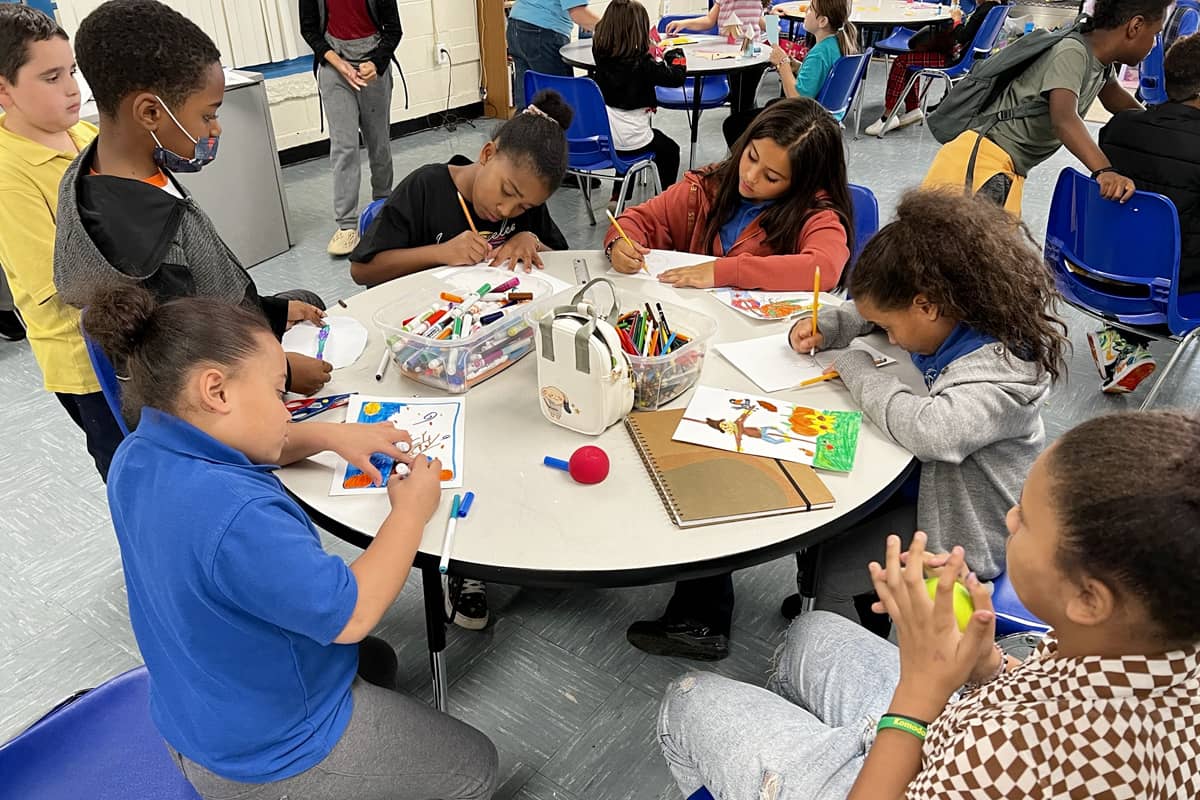
The students are using cardboard, glue, and coloring tools to make their own masks. As one student cuts a large, jagged oval out of a box, Mosley says “This is somewhere for children to go and have the freedom of choice and find their own individuality.”